 Intcube EPM
  Intcube Data Governance
 Resource Center
  Service & Support
  Technical Consulting




Over 300 Corporate Clients are utilizing Intcube EPM

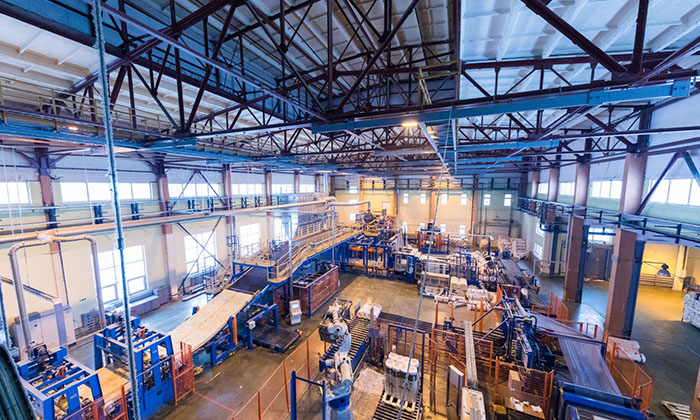
A modern cement industry enterprise with substantial total assets operates across multiple sectors including cement, commercial concrete, logistics, and real estate. Due to its extensive industrial coverage and large data volume, the company required a mature comprehensive budget management system to better interpret, communicate, and execute corporate strategy amid social uncertainties and future challenges. Intcube partnered with the client to establish a tailored comprehensive budget management system that quantitatively and systematically reflects the objectives and action plans of all operational activities, forming a basis for management control.
The ultimate goal of comprehensive budget management is strategy implementation. Budget targets must align with strategic objectives. As a quantitative tool, budgeting reinforces and supports measurable strategic goals. Budgeting is not an end in itself but a management method—a means of objective management that extends beyond financial control to include sales, production, investment, human resources, and other operational activities. Through Intcube’s optimization, the company’s budget management software compares and analyzes actual operations against budget targets, enabling continuous adjustment of production and operations to achieve management objectives.
▌ Current Management Status: Budget Management Not Yet Executed, System Requires Improvement
In recent years, with the growing adoption of comprehensive budget management systems and digital transformation, the company had developed a basic budgeting model. However, practical budget management remained in its early stages. The Comprehensive Budget Management Standards and Budget Preparation Manual urgently required refinement to help the company respond swiftly to changes in the business environment. Although budget reporting forms, processes, and responsibilities were partly defined, recent organizational reforms delayed budget implementation. Performance evaluation methods and indicator systems were still underdeveloped.
The existing basic budget management framework struggled to support the group’s business growth, leading to several challenges:
● Insufficient interdepartmental information sharing
● Disconnect in financial consolidation and balancing
● Lack of systematic business-driven budgeting
● Inadequate detail in investment budgeting
● Passive control over fund disbursements
Intcube provided optimization services for the comprehensive budget management system, establishing budget and information management for specific business segments, building an effective capital budget control platform, and achieving integrated management of procurement, consumption, and inventory. The project also optimized standard quota calculations and management of certain operations, helping the company take a solid step forward in digital transformation.
▌ System Re-engineering: Building a Scientific and Complete Comprehensive Budget Management System
The comprehensive budget management organizational system is responsible for budget preparation, approval, execution, adjustment, and evaluation. A scientific and sound organizational structure is essential for implementing budget management and achieving budget targets. Intcube began by clarifying the group’s organizational system and defining the responsibilities of budget management bodies. The team then rationally determined and effectively decomposed budget targets, designing a model for target setting and decomposition that supports dynamic adjustment based on influencing factors.
For budget preparation, Intcube improved the enterprise budget system from the perspective of “Four Characteristics and Four Transformations”:
Standardized Operations Adapting to Variability
Openness in budget entities and items is essential. Intcube designed and standardized dimensions such as budget responsibility units and budget accounts, and rationalized dimension values, laying the foundation for collecting standardized information during system implementation.
Detailed Content Following Business Drivers
● Refined budget preparation content, especially for key budget items
● Detailed budget hierarchy, extending from subsidiary level to controllable responsibility units
● Designed detailed production and operation plans by period to follow business-driven principles
Process-Oriented Control Ensuring Cost Controllability
Budget preparation layers reflect control requirements at different levels. Items are classified as controllable or non-controllable, with emphasis on controlling the former. Budget responsibilities are clearly assigned to implement management control.
Integrated Data Enabling Automation
● Connected accounting data with budget data
● Supported various management information needs, including annual budgets and monthly operational analysis
● Enabled data sharing through the system
After establishing the budget preparation model, Intcube built the logic for generating operational and financial budget statements based on business attributes, as well as the internal logic within each business segment. This helped optimize the budget form system, classify common and specific forms, refine budget tables and items for each business segment, and incorporate key business factors affecting revenue and costs into the budgeting process. These interconnected operational activities form a complete dynamic value chain, enabling the enterprise to plan, control, and coordinate future operations.
● Improved Material Procurement, Consumption, and Inventory Budgeting: By detailing material usage budgets and adding material inventory and procurement budgets, the system supports group-level centralized procurement management.
● Refined Investment Budgeting: Major capital investments are concentrated in large infrastructure and technical renovation projects, which involve substantial funding and long cycles. Detailed budgeting aids in annual investment scale and fund control.
● Monthly Breakdown of Financing Budgets: Currently, the group has sufficient funds and primarily uses bank acceptance notes for financing. Incorporating this method into the annual budget helps save fund positions and strengthen acceptance management.
● Streamlined Budget Preparation Process: Grassroots units prepare budgets, functional centers conduct itemized reviews, and the cost department consolidates and balances the budget before submitting it to the group executive meeting for review. Departments separately report and explain their budgets.
In budget execution, the project achieved rigid control over the group’s annual investment budget and total project investment. Budget execution monitoring ensures all operational activities occur as planned. If deviations occur, causes are identified, responsibilities assigned, and improvement measures defined.
Strengthening budget supervision and analysis and establishing a rigorous budget adjustment mechanism were critical to this project. For significant variances requiring quantitative analysis, the finance department decomposes the variances by cause and traces responsibilities to relevant departments. Total budget variances are broken down into price and quantity differences. The adjustment mechanism allows timely budget revisions in response to major objective changes, guiding execution while ensuring fairness in budget assessments.
Through restructuring the comprehensive budget management solution and building the budget management platform, the project rationalized, standardized, and detailed the comprehensive budget management processes, implementing responsibility budgeting. By refining business-driven budgeting, it advanced detailed budget management, constructed budget indicators and inter-statement logic, improved the logic and accuracy of budget preparation, standardized reporting processes, enhanced interdepartmental collaboration, and laid the foundation for control platform functionality. Integration of actual data enhanced budget analysis capabilities and improved decision support for senior management. Ultimately, the project elevated the client’s comprehensive budget management level and effectiveness.
▌ Unified Budget Preparation System Realizing Integrated Production-Supply-Sales
The group’s production operations are discrete, with limited continuous production across products, though some products serve as raw materials for downstream processes. Inventory is categorized into material inventory and product inventory. Products affecting downstream processes are excluded from product inventory calculations and treated as material inventory, enabling production units to input a unified production plan. The project met budgeting requirements for multiple business segments, allowing data aggregation by segment and region, integrating diverse budgeting needs, and simplifying budget logic through unified budget forms.
By optimizing the fundamental comprehensive budget management model, the project substantially improved the efficiency and quality of budget management. Modern industrial enterprises face challenges such as wide business scope, large data volumes, and numerous management departments—all critical considerations for building an effective modern performance management system. Based on industry characteristics and business attributes, Intcube constructed a unified budget preparation system from a responsibility logic perspective, realizing an integrated production-supply-sales operational model. This significantly reduced the complexity of the budget system, supporting the company’s digital transformation journey. By leveraging the process control features of comprehensive budget management, the solution helps the company confidently respond to social uncertainties and proceed steadily toward future development.
