Intcube Data Governance_北京智达方通科技有限公司

Intcube Data Governance
Based on Intcube Booster and big data analysis technology, this integrated platform provides enterprises with comprehensive data management, processing, rule-setting, and governance capabilities. It supports various data analysis methods and models, effectively enhancing data quality and optimizing data management efficiency.

Core Products
Intcube Booster Intcube Booster
Intcube Booster
A JavaEE-based multidimensional data storage and OLAP computing engine platform that supports multidimensional modeling, dimension hierarchy management, aggregation computing, and MDX business rule parsing. Equipped with intelligent dynamic computation optimization technology to enhance query performance. Its distributed storage architecture meets massive data processing demands and enables cross-model data linkage and flexible analysis. With a no-code configuration interface, it delivers sub-second responses for comprehensive budgeting, business analysis, and other scenarios.
Intcube GDB Intcube GDB
Intcube GDB
A versatile graph database system that supports distributed deployment and applications, featuring elastic scalability and high availability. Built-in with various graph traversal and computation algorithms, it accommodates both OLTP and OLAP graph data analysis. Suitable for diverse application scenarios such as social networks, financial fraud detection, real-time recommendation engines, knowledge graphs, and industrial domains.
Intcube FusionDB Intcube FusionDB
Intcube FusionDB
Integrating capabilities from multiple databases, it effectively reduces development and operational costs for users. It supports the integration of diverse structured and unstructured data types, including numbers, dates, text, images, videos, and audio. Offering versatile data sources and query methods, it enables flexible deployment for various workloads and ensures high scalability.
Intcube ClusterDB Intcube ClusterDB
Intcube ClusterDB
Based on the principle of ‘physically distributed, logically unified’ data management, data is stored across multiple nodes, each with independent processing capabilities. Users can globally access and manage regionally distributed data through a unified data center. The system offers high availability, easy scalability, and strong fault tolerance, making it suitable for executing complex queries and addressing diverse business needs.
Product Architecture
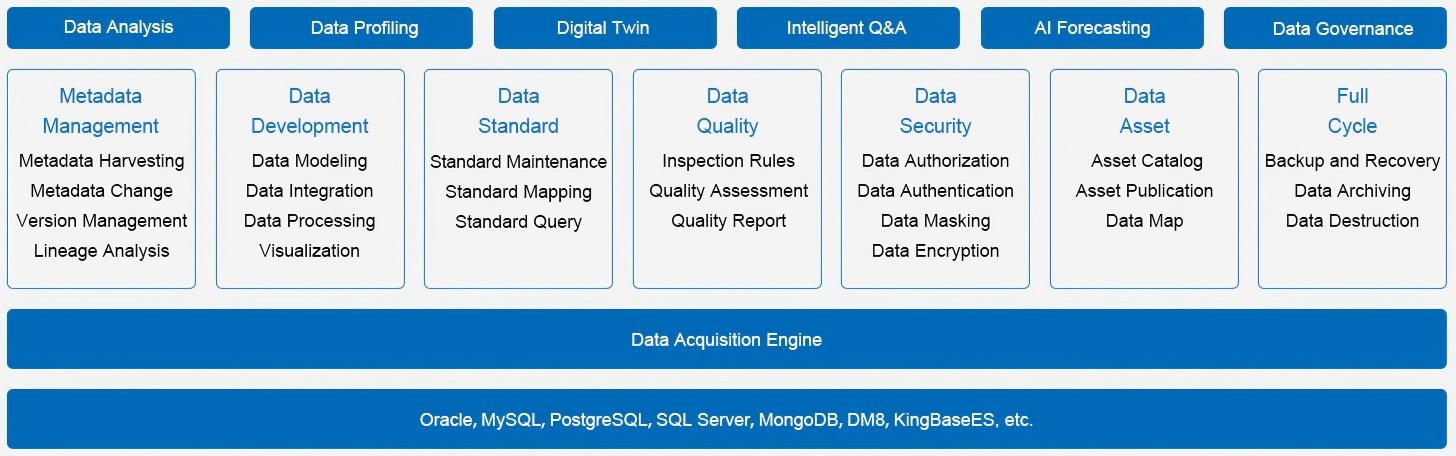
Data Governance Portal

智达方通数据治理平台(1).jpg

Core Features
Core Features
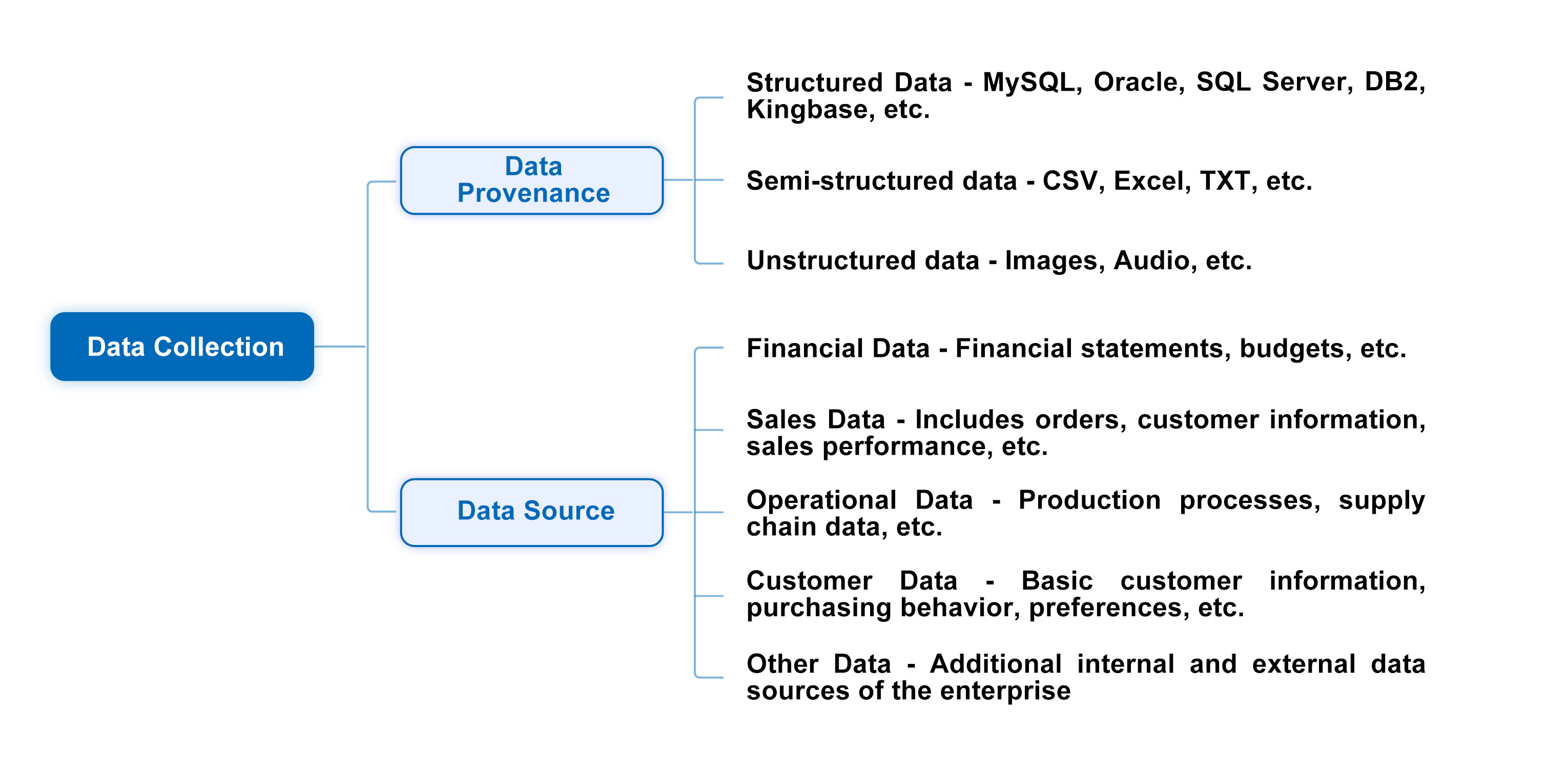
Based on a self-designed computing engine, it supports multiple data sources—including databases (MySQL, Oracle, SQL Server, DB2, etc.), files, APIs, FTP servers, and Kafka. It enables hierarchical management of datasets by subject domains, subject sets, and subject tables. Data from diverse sources is collected, organized, cleansed, and transformed before being loaded into a new data source, achieving integrated and unified data views.

Core Features

Metadata Management
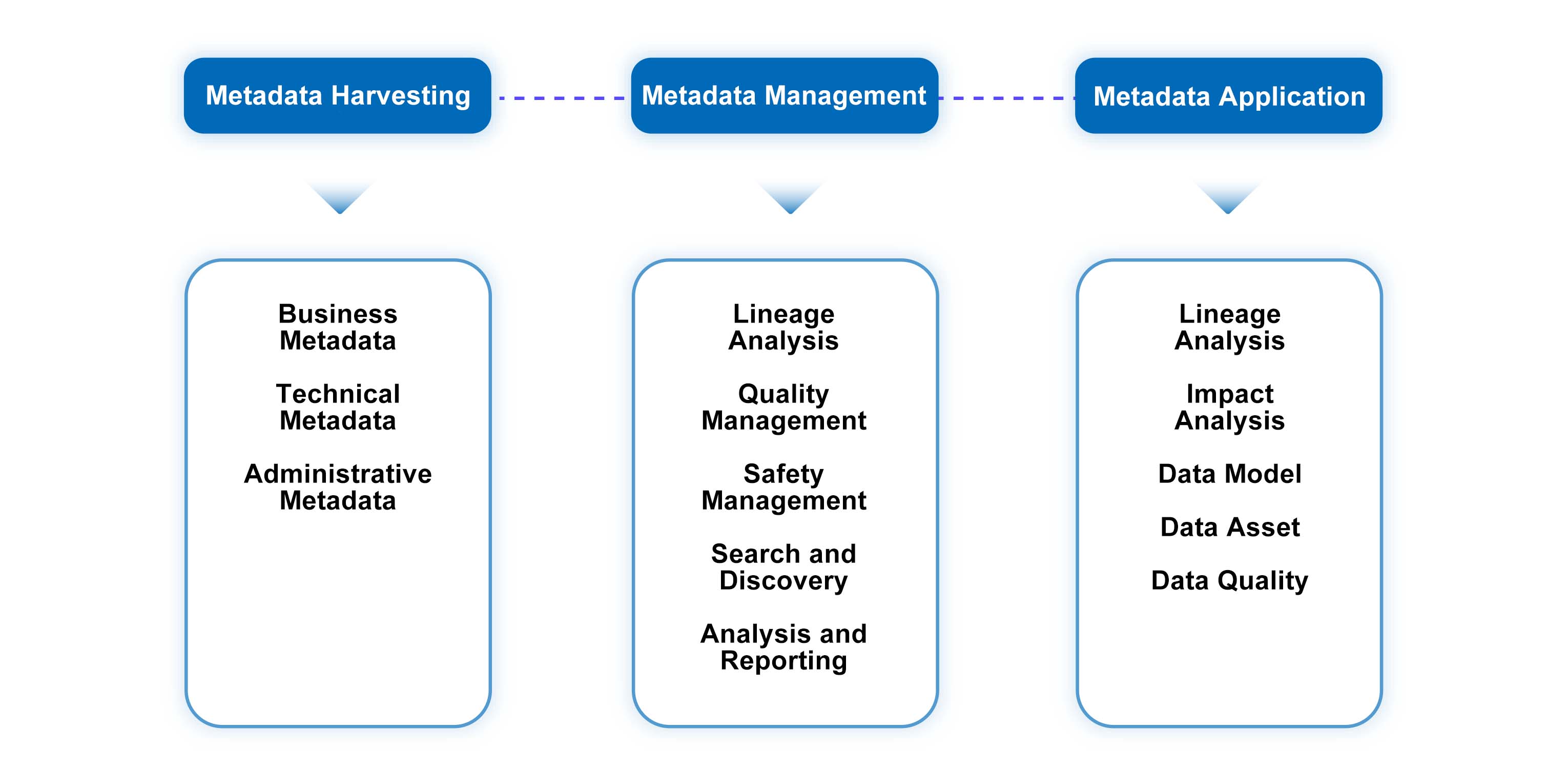
Achieve automated end-to-end collection of full metadata across the application chain, including data entities (descriptions of systems, databases, tables, and fields) and logical metadata generated during data processing. Support metadata maintenance, perform lineage, impact, and full-chain analysis, and enable versioned metadata publication from the latest updates to approved versions. Establish a globally visualized view of data resources.

Metadata Management

Data Quality Management
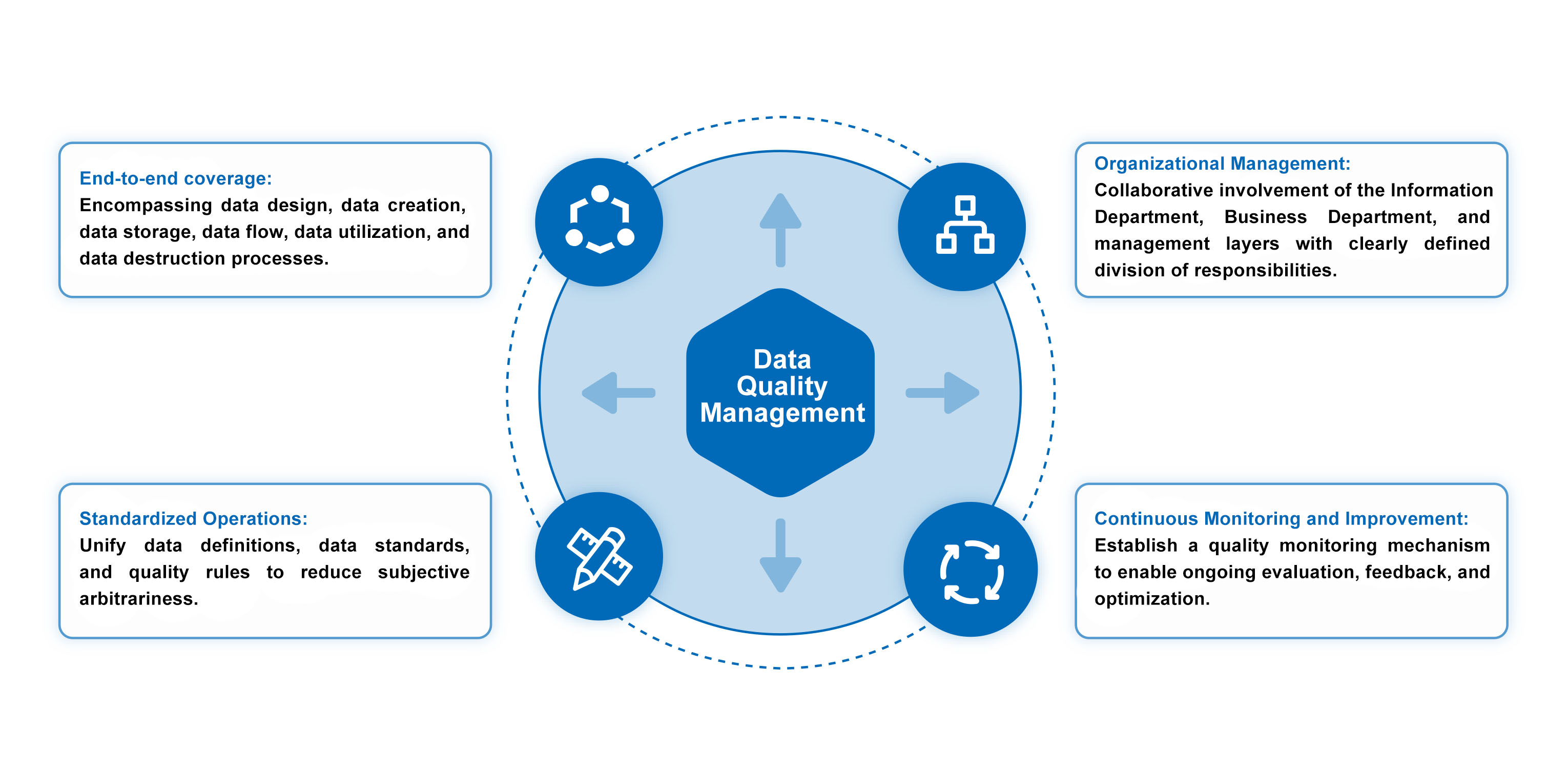
Build a data standards system that uses data standards as the retrieval basis and metadata as the retrieval object. It incorporates business processes, rule configuration, and inspection plans, and supports user-defined data quality rules. The system automatically performs rapid data quality checks, generates data quality reports and evaluation results. When data quality issues are detected, it can automatically track them, generate issue tickets, and distribute them autonomously.

Data Quality Management

Data Standards and Classification
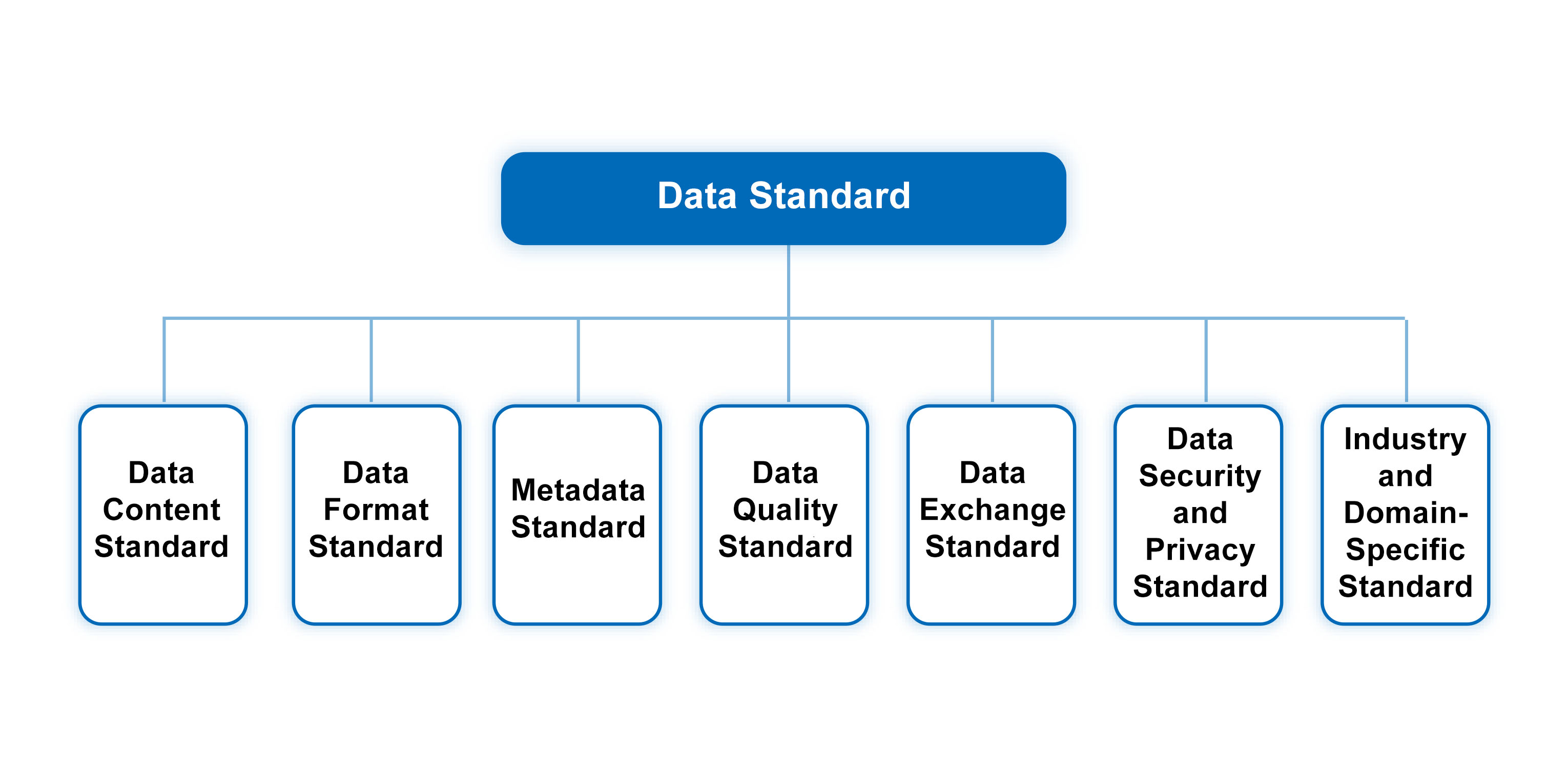
Provide unified data standards and classification methods, establish basic data standards and indicator data standards, standardize data usage, and ensure the timeliness and accuracy of data analysis. Data standards are automatically linked with metadata to unify field standards, establish data baselines using these standards, and consolidate data management protocols.

Data Standards and Classification

Data Security & Compliance
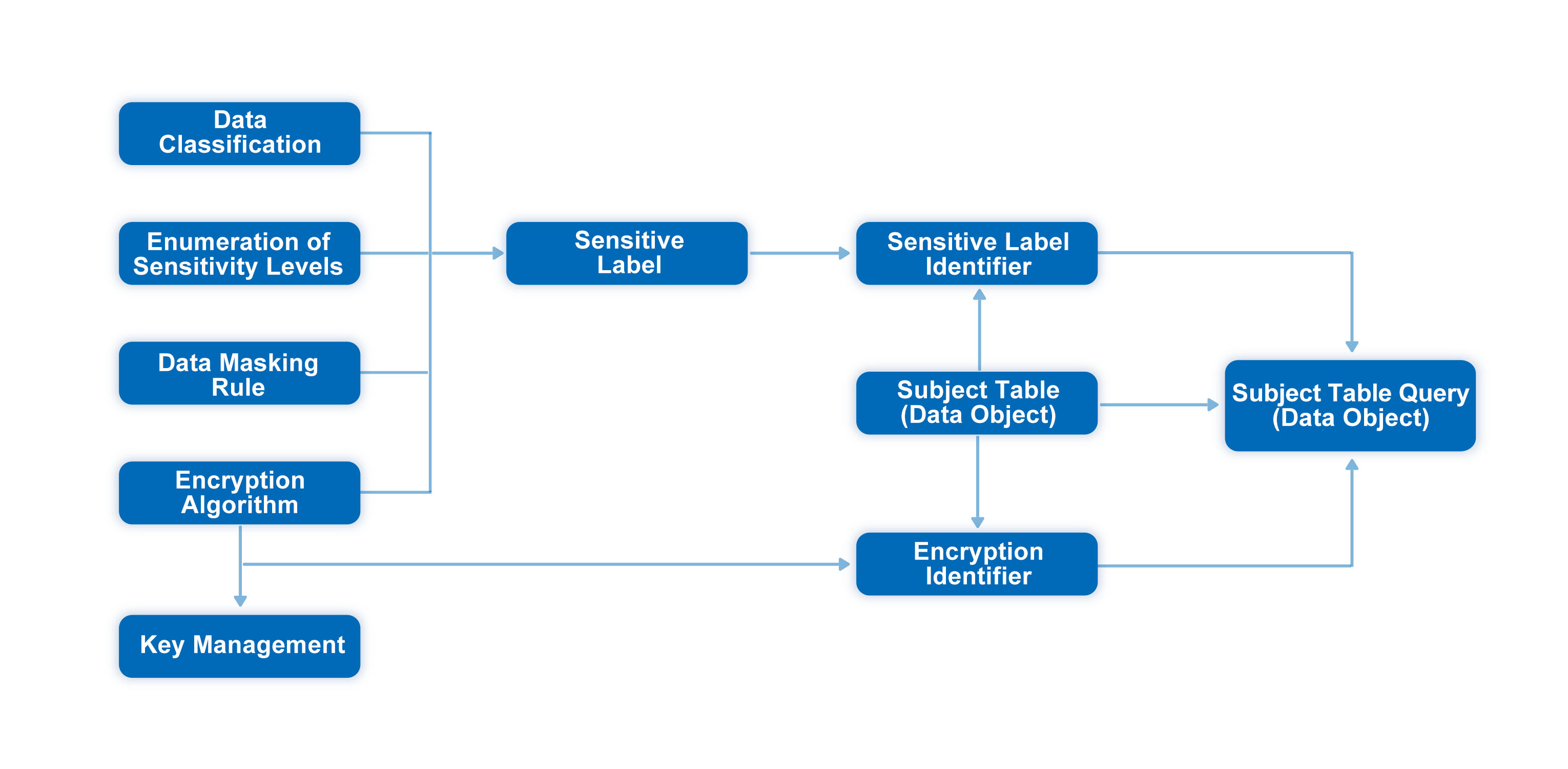
Establish an enterprise-level data security framework encompassing technical, management, and operational systems. Implement unified data classification, assign desensitization labels, and support configurable desensitization rules with predefined data security levels. Enable data encryption and desensitization to prevent unauthorized access and ensure compliance with relevant regulations.

Data Security & Compliance

Data Lifecycle Management
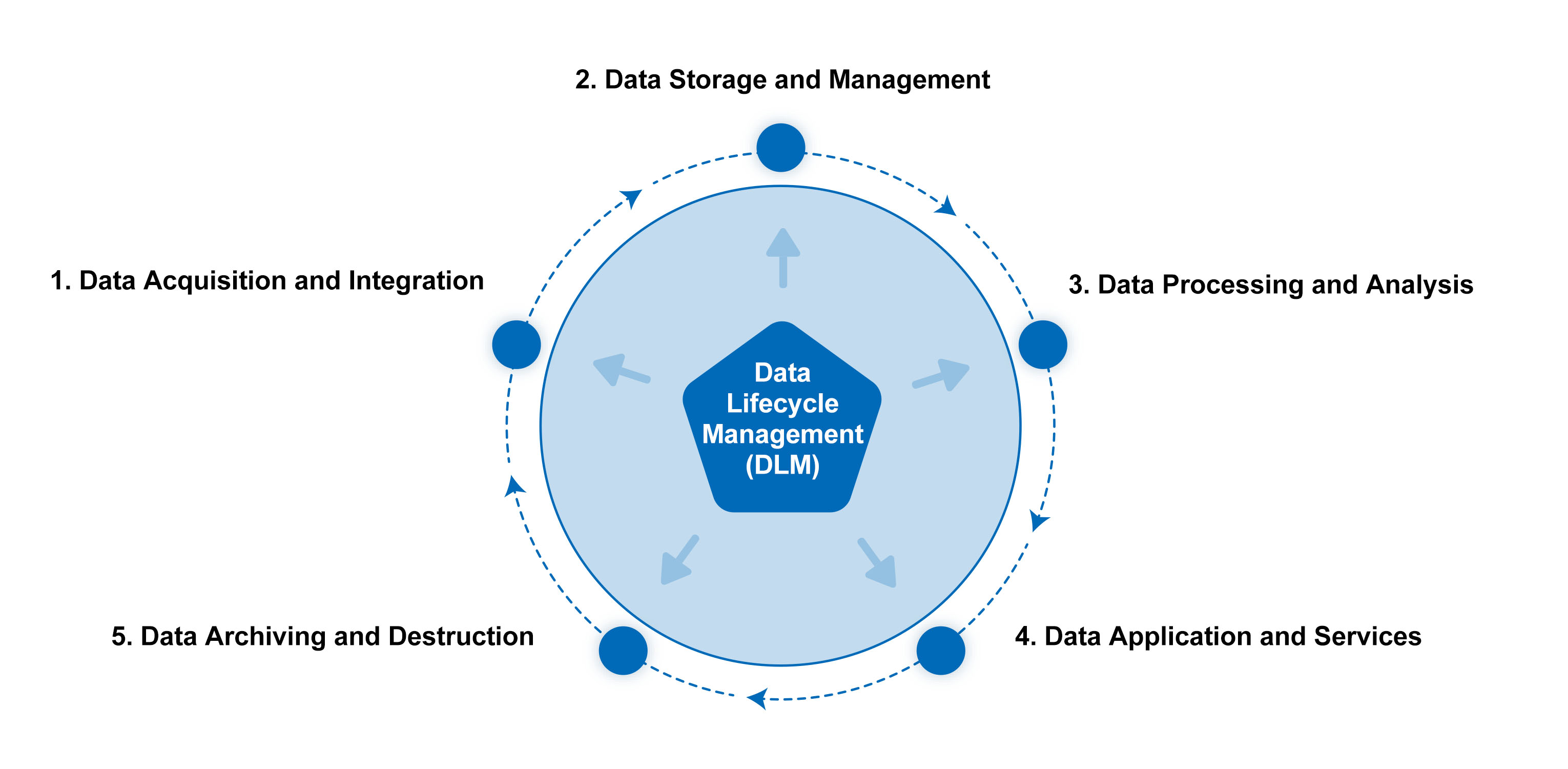
It manages the entire data lifecycle from creation to retirement, including creation, collection, storage, processing, analysis, archiving, and deletion. The system supports organizing data assets in a catalog, performing regular data archiving and destruction, enabling visibility and control over data, and ensuring precise management and efficient utilization of the enterprise data ecosystem.

Data Lifecycle Management

Key Advantages
High Performance, Reliability and Stability

Efficient query and caching synchronization technology supports distributed deployment, significantly enhancing performance. Built on the same technical architecture as mainstream international multidimensional databases, it has undergone decades of technological development and optimization, ensuring stable operation under high-load and high-concurrency environments. The system incorporates built-in data backup and recovery strategies, enabling rapid data restoration during failures to minimize business disruption.

Autonomous and Secure

The core technology achieves full autonomy and controllability, reinforced by robust data security mechanisms including data encryption, access control, and logging. Customers can assign data access and operational permissions based on user roles and privileges, ensuring sensitive information remains inaccessible to unauthorized users. The system supports multiple encryption algorithms to safeguard data against theft or tampering during transmission and storage.

Compatible with Multiple Data Types

Supports multiple data types, including structured, unstructured, and semi-structured data. The system accommodates traditional relational data models for streamlined data management and analysis, while also providing robust support for unstructured data such as videos, audio, images, documents, and text, as well as semi-structured data like graph data, multimedia data, and geospatial data. This enables enterprises to meet diverse data management needs.

Unified Control and Management

Simple and quick installation, deployment, and development. Users can efficiently and comprehensively perform system configuration, monitoring, and maintenance through a unified platform. Administrators can store and manage different types of data via the system, with encryption protection for corporate confidential information. The system supports regular maintenance monitoring and enables rapid intelligent analysis of information management issues, providing corresponding solutions when problems arise.

Diverse Use Cases
Diverse Use Cases

It provides users across various industries with a wide range of development tools and APIs, supporting multiple programming languages and frameworks to facilitate rapid application development and integration. This enables enterprises to consolidate data resources, establish data integration and governance systems, and deeply leverage data value. The platform supports the construction of management and analytical applications—such as planning and budgeting, consolidated reporting, business analysis, customer analytics, project management, and performance evaluation—and offers both on-premises and cloud deployment options.

Customizable and Highly Scalable

Intcube Booster offers extensive customization capabilities, allowing users to tailor data structures, analytical dimensions, and report formats to their actual needs. It supports personalized development for users in specialized industries or with unique management requirements. Additionally, Intcube Booster provides excellent scalability to accommodate evolving business needs, enabling enterprises to effortlessly adapt to new data dimensions and analytical demands.

Use Cases
Enterprise Application Data Integration
Providing centralized, structured business data for enterprises. Extracts and transforms data from various operational systems such as Finance, ERP, CRM, and HR through ETL tools into a multidimensional database, preparing it for subsequent financial analysis and data mining applications.

Enterprise Application Data Integration

Build Enterprise Analytics Applications
It can be integrated with existing enterprise business systems on Intcube Data Governance to build applications for business analysis, customer analysis, performance evaluation, and decision support.

Build Enterprise Analytics Applications

Design EPM Management System
Leveraging Intcube Booster's powerful multidimensional data analysis and query capabilities, it enables the design of applications such as comprehensive budget management, business intelligence analysis, cost and expense control, dynamic analytical reporting, enterprise project planning, customer behavior analysis, financial forecasting, and data mining.

Design EPM Management System

Case Studies
Collaborate With Us