 Intcube EPM
  Intcube Data Governance
 Resource Center
  Service & Support
  Technical Consulting


Over 300 Corporate Clients are utilizing Intcube EPM

Stay updated with industry trends and insights, and disseminate in-depth knowledge on smart enterprise management.
Currently, China's fiscal system reform continues to deepen. Governments at all levels, along with enterprises and public institutions, are actively implementing national requirements related to the construction of a management accounting system, exploring the establishment of a more forward-looking and scientific comprehensive budget management system. In this process, the value of the management accounting system is becoming increasingly prominent—by holistically considering cost, quality, and efficiency, investing in and constructing a management accounting system tailored to the enterprise's own business characteristics can generate quantifiable returns on investment, manifested across multiple dimensions such as cost reduction, efficiency enhancement, improved strategic decision-making capability, and faster response speed.
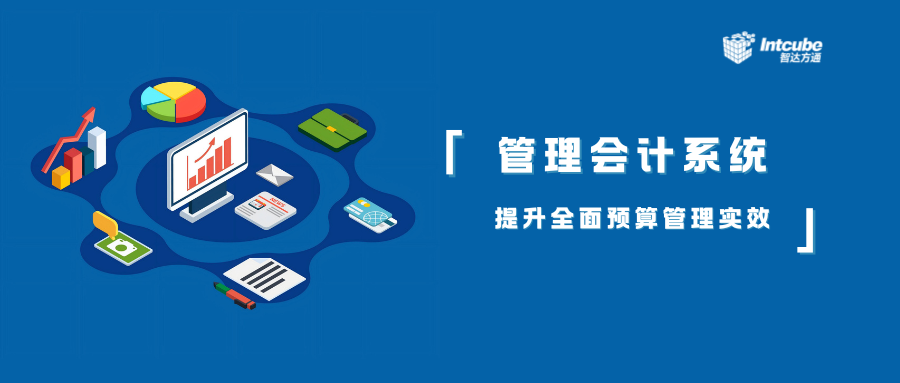
Developing and maintaining a high-level management accounting system does indeed require certain upfront costs and ongoing resources. Such strategic investments may not always yield immediate results. However, faced with increasingly complex business networks and multi-dimensional data systems, a well-functioning management accounting system covering modules like data governance, resource allocation, and budget monitoring can provide customized solutions by integrating the enterprise's actual operational situation and strategic priorities. Its core value lies in generating sustainable long-term returns by constructing models aligned with the enterprise's business logic. When the system can capture and integrate key business data such as inventory, sales, procurement, and finance in real-time, enterprise management gains the foundational capability for agile responses and precise decision-making, which substantially supports enhancing the enterprise's profitability.
01 Deepening Management Accounting System Construction to Facilitate Strategy Implementation
By integrating various management tools, the management accounting system is deeply embedded into every aspect of enterprise operations, providing robust support for operational decisions, process control, and performance evaluation. Strengthening the management accounting system is essentially equipping the enterprise with more refined analytical tools and control methods, thereby reshaping its competitive model in the market. The core value of an advanced management accounting system lies in its ability to construct causal models based on the inherent logic between revenue, cost, and profit, providing real-time business insights rather than merely aggregating and analyzing historical data. Investing in such a system is equivalent to laying a solid data foundation for strategy execution, ensuring the enterprise can not only react promptly to market changes but also proactively anticipate trends and seize development opportunities.
From an operational perspective, optimizing the management accounting system helps delve into business processes, identify and eliminate redundant steps, simplify workflows, and ensure that data analysis can be promptly translated into actionable improvement measures. By meticulously breaking down the cost structure, the enterprise can gain a clearer understanding of the rationality and necessity of various expenditures, thereby effectively controlling unnecessary expenses, gradually absorbing the initial investment in system construction, and achieving sustainable operations. In today's complex business ecosystem, the management accounting system has transcended its role as a mere tool to become a strategic asset for the enterprise. It enhances the enterprise's sensitivity to market changes, insight into potential opportunities, and judgment regarding competitors' actions, thereby helping the enterprise consolidate its existing market position while exploring new spaces. In the long run, this strategic positioning built upon data capabilities is becoming a key factor in shaping an enterprise's differentiated competitive advantage.
02 Realistic Challenges in Advancing System Upgrades
Although there is a general consensus on the strategic importance of upgrading management accounting systems, a significant gap remains between system deployment and the actual realization of operational benefits. The initia costs during system transition, adjustments in employee operating habits, and the parallel conflicts between new and old processes represent hurdles that many enterprises must overcome. When advancing system construction, many enterprises often need to find a balance between investing in innovative products and ensuring short-term operational returns, which directly impacts whether expectations for future returns can be met.
Furthermore, fluctuations in the external market environment, adjustments in regulatory policies, and changes in internal control requirements introduce considerable uncertainty into system construction. Taking the construction industry as an example, as local governments tighten supervision over project funds, enterprises advancing management accounting system upgrades must simultaneously consider integration with bank fund supervision systems, the accounting logic for special wage accounts for migrant workers, and the automatic handling of cross-regional tax prepayments. It is not uncommon for such factors to extend system implementation cycles by 20% to 30% compared to initial estimates. Facing these challenges, enterprises need to shift their focus from "system go-live" to "value realization," leveraging management accounting tools to deeply analyze market trends and their own operational status. Through data modeling and predictive analytics, they can achieve pre-event planning, in-process control, and post-event evaluation in budget management.
03 Key Elements for Successful Implementation of a Management Accounting System
For a management accounting system to truly deliver value and achieve the desired return on investment, effective control over the implementation process is crucial. A high-quality management accounting system should not be merely a "dedicated tool" for the finance department; its reach should extend to various business lines, promoting the participation of relevant departments in system application and forming a target transmission mechanism characterized by horizontal collaboration and vertical integration. Before selecting or upgrading a system, enterprises need to conduct a comprehensive diagnosis of their current management accounting system, clarify the gap between existing system functions and strategic goals, define the core capabilities the new system should possess, and develop a clear implementation plan. In this process, enhancing cost control precision, strengthening decision support capabilities, and responding quickly to the needs of internal and external users should be key consideration dimensions.
Once the plan is determined, the integration of the new system with existing business processes must be properly addressed. Key elements such as timelines, resource allocation, budget control, and risk contingency plans should be holistically considered to ensure smooth data migration and to provide end-users with continuous operational support and responsive issue resolution. During the system operation phase, operational effectiveness needs to be continuously monitored against established budget management and performance evaluation goals, with regular assessments conducted. Technical support is also indispensable. A suitable technical architecture should be matched based on business requirements, systematically building data analysis capabilities, optimizing process design, and standardizing implementation steps to effectively reduce resistance during system rollout.
Taking the Intcube EPM system as an example, it provides the following key support for building a management accounting system: Firstly, it breaks down business-finance data barriers, integrating data from finance, operations, sales, and other departments onto a unified platform, automatically extracting business data such as project hours and purchase orders to effectively address data fragmentation issues. Secondly, it supports agile budget adjustments. When the marketing department needs to apply for an additional budget due to a new product launch, managers can create an "additional forecast version" through the system to quickly simulate the impact of the adjustment on the company's profit. Thirdly, it strengthens process control. When an employee submits a travel application, the system validates the available budget in real-time, achieving the principle of "no application without budget," and automatically warns of abnormal overspending via dashboards. Fourthly, it enables refined cost accounting, supporting cost allocation by product line or project dimension to accurately calculate the true gross profit of each product.
In recent years, the technological roadmap for management accounting systems has evolved rapidly. Some domestic enterprises have begun experimenting with embedding large AI models into comprehensive budget management systems to achieve automated report generation, intelligent forecasting, and risk warning. Intcube is progressively integrating technological concepts such as data middle offices, zero-trust architecture, and business-finance integration platforms into the information construction of its products. This helps an increasing number of enterprises collaboratively advance efforts across the three dimensions of strategy, technology, and systems to solve persistent problems such as "difficulty in data integration, weak system coordination, and high security risks."
To ensure that management accounting plays an effective role in comprehensive budget management, enterprises should adhere to a strategic orientation, aim for sustainable development, and operate within cost-effectiveness constraints. They should leverage the tools and methods of management accounting to promote deep integration of business and finance. In the current context of accelerating digitalization and continuously evolving business environments, integrating and optimizing management accounting systems, breaking down barriers between business and financial data, and enabling them to truly function in budget preparation, execution monitoring, and performance evaluation are both an inevitable choice aligned with the development of management accounting and a crucial measure to enhance internal management capabilities and strengthen risk resilience.
