 Intcube EPM
  Intcube Data Governance
 Resource Center
  Service & Support
  Technical Consulting


Over 300 Corporate Clients are utilizing Intcube EPM

Stay updated with industry trends and insights, and disseminate in-depth knowledge on smart enterprise management.
Forecasting has become a core practice in corporate financial planning, working in tandem with areas like budgeting and risk management to help businesses navigate uncertainty and seize new opportunities. Accurate predictive analytics not only enhances decision-making but also builds credibility among key stakeholders. However, for many enterprises, forecast outcomes often fall short of expectations and fail to align with strategic goals. A prominent issue is the blurred line between sales forecasting and demand forecasting, whose targeted insights consequently lose their intended impact. Frequently, various forecasts are conducted in isolation, leading to departments lacking a deep understanding of the overall plan, and leaders missing interconnected perspectives to guide strategic decisions. Therefore, delving into the unique value of different forecasting methods and effectively integrating them using appropriate tools is crucial for unlocking their full potential.
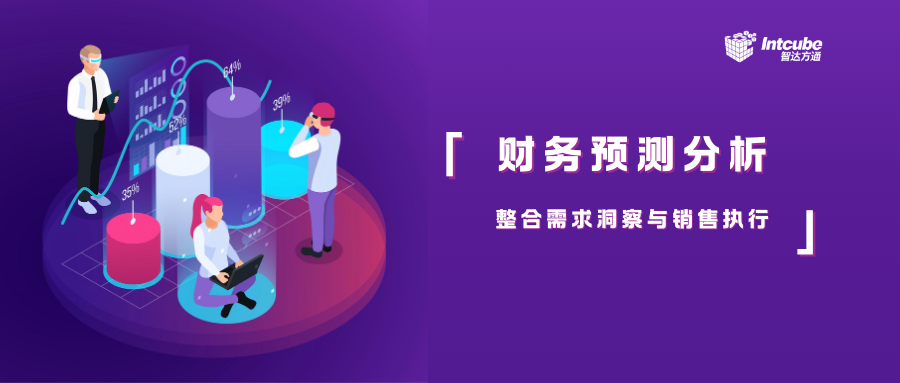
In practice, forecasting is actually a complex process composed of a series of distinct yet closely interconnected attempts, which together provide leaders with multi-dimensional, comprehensive views of business performance. Deeply understanding and mastering the specific implementation methods and steps of these forecasts can significantly aid in developing comprehensive and highly cohesive strategic-level business plans. Such plans can not only accurately gauge the current market pulse but also flexibly adapt to various evolving customer demands that may arise in the future.
Demand Forecasting
Demand forecasting is the process by which enterprises, based on market feedback, conduct in-depth analysis and research on future changes in product demand, understand demand patterns, and predict their development trends, thereby providing a reliable basis for enterprise implementation and control decisions. Demand forecasting often addresses questions such as: What exactly do customers need? When will they need it? Which factors influence external demand for products and services? In practice, demand forecasting is a key operational intelligence activity. Accurate demand forecasting not only guides supply chain agility, inventory management, and product launch timing but also determines whether an enterprise captures market opportunities or misses them.
To achieve precise demand forecasting, enterprises must comprehensively consider the following factors:
● Historical Demand: Analyze seasonality and long-term cycles to reveal consumer behavior patterns across years and industries.
● Macroeconomic Indicators: Monitor external signals that directly influence purchasing power and timing, such as interest rates, employment data, or consumer confidence.
● Consumer and Market Trend Data: Capture social sentiment, demographic shifts, and competitive activities to discern consumption preferences before they manifest in sales data.
● Advanced Analytics and AI: Integrate different datasets to identify anomalies early and leverage AI-powered predictive analytics tools for more accurate insights.
Demand forecasting acts like an early warning system, empowering leaders to proactively understand consumer behavior dynamics and strengthening the alignment between demand signals, operational planning, and financial priorities. The strategy for demand forecasting varies depending on the volume of data an enterprise possesses and the rate of market change:
● Passive Forecasting: Relies solely on historical data to build predictive models, particularly suitable for stable, predictable market environments.
● Active Forecasting: Adapts flexibly to strategic changes such as new product launches, marketing campaigns, or supply chain adjustments.
● Qualitative Forecasting: Utilizes expert opinions, focus groups, or market research to form predictions when historical data is scarce or unreliable.
● Quantitative Forecasting: Employs statistical models and AI technologies to delve into patterns, trends, and correlations within large datasets.
Each forecasting method has its unique application, and the most effective approach often involves combining multiple types organically to leverage the strengths of each, thereby constructing a comprehensive and accurate view of future demand.
Sales Forecasting
Sales forecasting involves developing practical sales plans based on an analysis of future influencing factors and past sales performance. It is not merely an exercise for the sales team but connects frontline performance directly with overall business strategy and objectives. Accurate forecasting guides the setting of revenue targets and aids decision-making in critical areas such as territorial coverage and resource allocation. High-quality sales forecasting estimates future performance by meticulously considering the following factors:
● Sales Pipeline Health: The quantity, balance, and progression of opportunities across stages, reflecting current capacity and future growth momentum.
● Productivity: Conversion rates and win rates directly reveal the effectiveness of turning opportunities into actual sales.
● Sales History: Multi-period trends indicate the stability, improvement, or potential risks in sales performance.
● Data Quality: The completeness and accuracy of historical sales data directly impact forecast reliability and the need for adjustments.
When evaluated together, these inputs transform sales forecasting into a diagnostic tool. It reveals whether the business operating model is functioning as intended and if execution aligns with strategic growth goals. Different sales forecasting methods are distinguished by how they interpret historical results and real-time sales activities:
● Historical Forecasting: Uses past sales data to predict future outcomes; methodologically simple but limited when market conditions change.
● Sales Pipeline Forecasting: Evaluates opportunities by stage and probability of closure, providing visibility into near-term revenue.
● Multivariable Forecasting: Synthesizes various factors (e.g., deal size, performance, seasonality, market trends), often enhanced by AI.
● Cycle Length Forecasting: Predicts future outcomes based on average sales cycle duration and velocity, helping identify bottlenecks and resource needs.
Choosing the appropriate forecasting method depends on what leaders wish to understand: short-term performance, long-term growth potential, or overall sales efficiency. Mature enterprises typically blend models flexibly and adjust their forecasting approach as markets and customer priorities evolve.
While sales and demand forecasting are often discussed together, they actually answer different questions and serve different strategic objectives. By comparing them directly, enterprises can gain clearer insights into how external demand translates into internal execution. Demand forecasting uncovers potential market trends, while sales forecasting assesses the enterprise's effectiveness in capturing that opportunity. Combined, they lay the foundation for unified financial planning and more accurate forecasting, thereby robustly supporting strategic decision-making.
Traditional forecasts often operate in silos. Today, however, intelligent financial tools can address the shortcomings of traditional forecasting by integrating diverse inputs into a single, interconnected system. In the current fast-changing and complex business environment, technology enables cross-functional integrated forecasting by amalgamating data from marketing, sales, operations, and finance. It builds dynamic scenario models and continuously incorporates real-time data for updates. This not only streamlines processes but also provides clearer insights, effectively driving overall business progress and significantly enhancing the continuous planning capabilities essential for enterprises to remain agile today.
