 Intcube EPM
  Intcube Data Governance
 Resource Center
  Service & Support
  Technical Consulting


Over 300 Corporate Clients are utilizing Intcube EPM

Stay updated with industry trends and insights, and disseminate in-depth knowledge on smart enterprise management.
In the wave of intelligent manufacturing, enterprise financial management is no longer confined to bookkeeping and accounting. It is deeply integrated into the entire process of business workflows, operational control, and service delivery, gradually evolving into a new form of "smart finance" characterized by dynamic sensing and intelligent collaboration. Compared to traditional Business Intelligence (BI), modern Enterprise Performance Management (EPM) platforms are becoming a crucial engine driving digital transformation. By integrating various business systems and breaking down barriers between departments and systems, they support comprehensive budget management in becoming real-time, refined, and intelligent, truly enabling data to become the fuel that drives the enterprise forward.
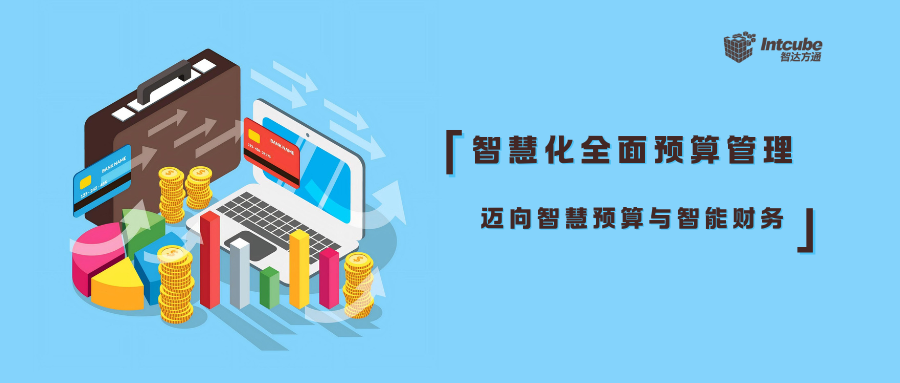
Currently, the market environment is complex and volatile, intensifying the challenges for enterprise managers. Finance teams must leverage smarter management tools to enhance operational efficiency, control management costs, and empower business decision-making. In recent years, with the deepening application of technologies like big data, cloud computing, and artificial intelligence, intelligent EPM systems have been able to achieve full-process automation and intelligence in budget preparation, execution monitoring, and predictive analysis, liberating finance personnel from tedious manual operations and allowing them to focus on value creation.
Why Promote the Intelligent Transformation of Budget Management?
In the past, many enterprises relied on Excel or paper documents for budget management work. This not only consumed significant time and effort but also made it difficult to ensure data accuracy, let alone meet rapidly changing business needs. Today, comprehensive budget management platforms, leveraging built-in data models and algorithms, can integrate historical internal data and external industry information in real-time, enabling multi-dimensional, visual analysis. This helps management promptly grasp operational conditions and make forward-looking decisions.
Secondly, intelligent budgeting systems can significantly improve the efficiency of enterprise resource allocation. During resource allocation, issues like information asymmetry and delayed decisions are common. Such platforms can monitor the operational data and resource demands of various departments in real-time. Through simulation forecasting and intelligent recommendations, they support more scientific and dynamic resource allocation. Additionally, these systems can promote the collaborative integration of internal and external resources, enhancing the enterprise's competitiveness in supply chain and ecosystem partnerships.
Talent and organizational management are also key areas of focus for intelligent budgeting. As employee experience receives increasing emphasis, more and more enterprises are leveraging technological means to advance the digital transformation of talent management. The new generation of EPM systems incorporates human resource data into the analysis framework. Through continuous tracking of data related to workforce structure, performance, skills, etc., they support more precise talent planning, performance evaluation, and incentive design, effectively achieving the goal of "data-driven talent development."
The Core Value of Intelligent Comprehensive Budget Management
01 Data Integration and Connectivity
EPM platforms can connect multiple systems such as finance, business, human resources, and supply chain, unifying, cleansing, and modeling scattered data. This not only breaks down data silos but also, through visual dashboards and real-time reports, enables managers at all levels to clearly understand the operational status. Based on a unified, reliable data source, enterprises can conduct deeper mining analysis, identify business patterns and potential opportunities, providing a solid basis for strategic decisions.
02 Dynamic Forecasting and Intelligent Decision-Making
Building on data integration, EPM systems support multi-version budgets, rolling forecasts, and scenario simulations. Enterprises can quickly adjust forecasting models based on market changes and assess the impact of different decisions on financial outcomes. For example, leveraging artificial intelligence technology and automated data processing systems to analyze historical data can automatically detect abnormal fluctuations and warn of potential risks, helping management respond proactively and improving the response speed and accuracy of decisions.
03 Performance Enhancement and Value Optimization
Through continuous monitoring of budget execution and business performance, EPM platforms help enterprises promptly identify issues and adjust strategies, thereby achieving cost optimization and benefit improvement. The system's built-in financial analysis models (such as cash flow forecasting, input-output analysis, etc.) can guide efficient capital allocation and improve return on assets. In the long run, this closed-loop management mechanism drives the enterprise's shift from "post-facto accounting" to "pre-event forecasting and in-process control," enhancing the enterprise's overall competitiveness.
How to Align the EPM System with the Enterprise's Actual Situation?
To successfully implement comprehensive budget management, one cannot simply apply a standard solution. Enterprises must consider their own industry characteristics, business model, and development stage when selecting and adapting a platform. For example, the manufacturing industry focuses more on production planning and cost accounting, the retail industry emphasizes sales forecasting and inventory turnover, while group enterprises prioritize consolidated reporting and cross-departmental collaboration.
Platform implementation cannot be separated from supporting organizational and process adjustments. Enterprises need to clarify their budget management mechanisms, cultivate talent teams with integrated financial and business capabilities, and maintain sensitivity to new technologies and industry trends. Only in this way can the value of an intelligent budgeting system be truly unleashed.
The Intcube EPM system provides a relatively flexible solution in this regard. Based on multi-dimensional database technology, it supports enterprises in building budget models from different business perspectives, achieving full-process management encompassing "preparation - control - analysis - evaluation." In recent years, the Intcube EPM system has also continuously enhanced its capabilities in agile forecasting, cloud-based collaboration, and AI-enhanced analysis, helping enterprises address budget adjustment needs in an uncertain environment. By modeling and analyzing financial and business data on a unified platform, Intcube EPM helps eliminate information gaps, improves collaboration efficiency between departments, and supports the enterprise's gradual achievement of data-driven performance management.
A comprehensive budget management platform is not merely a digital tool; it is a core supporting force for the enterprise to integrate resources, optimize decisions, and enhance performance. Driven by both intelligent manufacturing and the digital economy, its role is shifting from auxiliary recording to active empowerment. In the future, with the continuous evolution of technology, intelligent EPM will integrate even more deeply with business scenarios, assisting enterprises in moving towards a new era of management that is more agile, precise, and resilient.
