 Intcube EPM
  Intcube Data Governance
 Resource Center
  Service & Support
  Technical Consulting


Over 300 Corporate Clients are utilizing Intcube EPM

Stay updated with industry trends and insights, and disseminate in-depth knowledge on smart enterprise management.
In recent years, intelligent technologies have been quietly reshaping every aspect of corporate operations—from decision-making to financial management—not only significantly enhancing productivity and creativity but also opening up new sources of economic value for enterprises. At the same time, finance teams can generate unique value by moving beyond automation and unlocking new possibilities. However, despite the vast potential opportunities brought by the widespread adoption of intelligent technologies, they also come with numerous challenges. Therefore, enterprises urgently need to develop a wise collaboration strategy that deeply integrates human intelligence with artificial intelligence to jointly drive sustainable growth and achieve meaningful success.
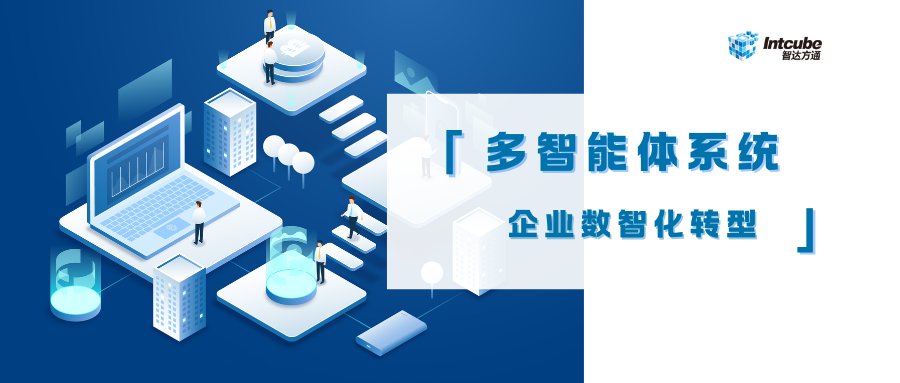
Multi-Agent Systems (MAS) involve groups of intelligent agents collaborating to accomplish common goals and address complex challenges. By maximizing collaboration and distributed intelligence, enterprises can optimize intricate processes and respond more quickly to customer needs. Their potential applications are extensive and continue to expand. With the intervention of artificial intelligence, finance teams can leverage technological power to rapidly and accurately perform functions such as plan drafting, data analysis, effect generation, and decision support, thereby uncovering new opportunities. This shift encourages enterprises to rethink how tasks and resources are allocated to create greater value.
The primary advantage of intelligent technologies lies in significantly improving the efficiency of finance teams. From extensive information collection and precise filtering to rapid responses to customer needs, various agent groups within a multi-agent system can perform their respective duties, not only handling complex tasks with ease but also automatically gathering feedback to ensure continuous improvement in customer satisfaction. As a result, finance teams can shorten response times and build closer connections with customers, who in turn can quickly obtain tailored solutions. This enhances the overall operational efficiency of the enterprise and provides teams with the support and resources needed to optimize operational models and foster a strategic culture. So, how can enterprises build an effective multi-agent system?
01 Define Clear Goals and Roles
Enterprise leaders must first clearly understand the problems to be solved and the overall system objectives. Each agent group within the system should have a well-defined role that contributes to achieving the ultimate strategic goals. In other words, each agent should have a specific position and set of tasks to prevent duplication of work and ensure all necessary requirements are covered. This clear and explicit setup enhances the system's operational coherence, thereby helping leaders make more rational decisions in areas such as resource allocation and team coordination.
02 Design Effective Communication and Coordination Mechanisms
As business operations expand, multi-agent systems require seamless communication between agent groups to ensure effective information exchange, coordinate actions across departments, and achieve final objectives. This may involve information transfer and data sharing between departments. By establishing coordination mechanisms, the system can efficiently advance different types of tasks through simple interaction rules.
03 Prioritize System Autonomy
Multi-agent systems must also ensure the autonomy of individual agents, enabling each agent to analyze its environment, review its goals, and make decisions within defined boundaries. Additionally, agent groups should incorporate human intervention measures, combining human input with intelligent analysis to adapt to changing conditions.
04 Implement Comprehensive Testing and Evaluation
Given the complexity of multi-agent systems, the design phase should encompass various scenarios, and comprehensive testing environments should be constructed to evaluate the performance of both individual agents and the overall system. Assess the system based on improvements in efficiency, accuracy, responsiveness, and the ability to handle unexpected events, and establish a continuous monitoring plan.
Multi-agent systems are unlocking entirely new approaches to planning, encouraging enterprises to iterate and innovate continuously, thereby accelerating development in areas such as product development, service optimization, financial management, and predictive analysis. Intelligent systems streamline complex processes, autonomously respond quickly to changing demands, execute contingency plans, and ensure that automated decisions remain highly aligned with corporate strategic goals. However, digital and intelligent transformation requires enterprise leaders to abandon traditional mindsets, develop more detailed metrics, and place greater emphasis on the value of insights and creative solutions to drive deeper penetration of intelligent technologies. Simultaneously, teams must adjust their collaboration and communication models, eliminate siloed operations, establish sharing mechanisms, promote information flow, and enhance cross-functional collaboration. As intelligent technologies become increasingly indispensable in business operations, fostering resilience and improving adaptability have become critical skills for enterprises to thrive. Leaders must not only understand the correct methods for implementing intelligent systems but also create an environment that facilitates digital and intelligent transformation.
Intelligent technology has evolved from a distant futuristic concept into a critical element of business success. As intelligent systems continue to redefine financial planning, enterprises can leverage the transformative power of these technologies to build more resilient and innovative solutions, focus on upskilling employees, cultivate adaptability, and make more scientific and comprehensive decisions regarding intelligent deployment. Enterprise leaders need to look beyond technology itself and consider how multi-agent systems integrate into cultural and workforce strategies, creating platforms that can autonomously adapt, continuously learn, and collaborate effectively. This will open new pathways for automated decision-making, data-driven approaches, and the exploration of intelligent financial solutions.
